Residential rodent exclusion functions as a definitive physical boundary rather than a recurring temporary fix. While broadcast baiting addresses active interior populations, it leaves openings vulnerable to immediate…
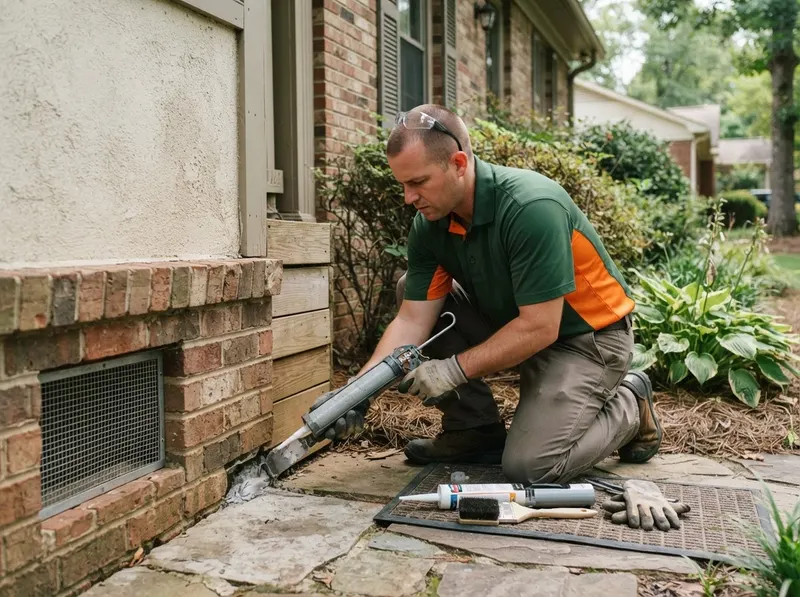
Residential rodent exclusion functions as a definitive physical boundary rather than a recurring temporary fix. While broadcast baiting addresses active interior populations, it leaves openings vulnerable to immediate reinvasion from surrounding tree lines and sewer paths. Mechanical exclusion solves this by utilizing 19-gauge galvanized hardware cloth, copper wire mesh, and exterior-grade elastomeric sealants. Mice can pass through an opening the size of a standard nickel (one-quarter inch), while adult Norway rats require an aperture measuring merely one-half inch. Technicians inspect the structure systematically from grade to ridge, identifying compromised crawlspace doors, gaps surrounding HVAC line sets, warped foundation vents, and roofline soffit gaps common to Midlands architecture. To maintain residential health and eliminate nesting hazards, exclusion practices follow technical safety principles outlined by the Centers for Disease Control and Prevention and guidance established by the Environmental Protection Agency.
Midlands architecture across Richland County presents unique physical vulnerabilities across distinct construction eras. In historic neighborhoods like Shandon, Earlewood, Elmwood Park, and Cottontown, century-old residences often feature raised pier-and-beam foundations with perimeter crawlspace skirting that shifts over decades. Norway rats gravitate toward damp soil near ground level, burrowing beneath foundation masonry and entering subflooring. Conversely, roof rats take advantage of lush hardwood canopies throughout Rosewood, Heathwood, Forest Acres, and Melrose Heights. These rodents travel overhead power drops and overhanging live oak limbs, infiltrating ridge vents and soffit returns near the attic line. The humid river basin climate surrounding the Broad River and Saluda River corridors accelerates wood softening, allowing rodents to chew through deteriorating fascia boards. Technical perimeter specifications align with standards set by the Clemson University Cooperative Extension, ensuring barrier integrity matches regional construction and climate demands.
Selecting permanent physical exclusion over endless chemical trapping represents a fundamental trade-off between upfront investment and recurring expenses. Trap-only services require ongoing service contracts and leave dead rodents decomposing inside wall voids, leading to severe odor issues and secondary insect infestations. Whole-home exclusion demands a higher initial labor investment to physically seal the perimeter, but it completely eliminates the need for continual interior toxic baits. For historic residences in Hollywood-Rose Hill or Old Shandon, sealing crawlspaces also limits moisture entry and secondary nuisance invaders. Procedures are executed according to residential housing safety standards overseen by the Department of Housing and Urban Development and materials compliant with the ASTM International specifications for steel screening materials. For homes with extensive roofline deterioration, standard carpentry repairs must precede flashing installations, as exclusion teams secure access points rather than replacing load-bearing architectural lumber.
Every job gets a firm, written price after a free on-site visit.
Tell us about your residential rodent exclusion job in columbia and we'll send a clear, written quote, usually the same day.
 MeadowPeak Pest Experts